
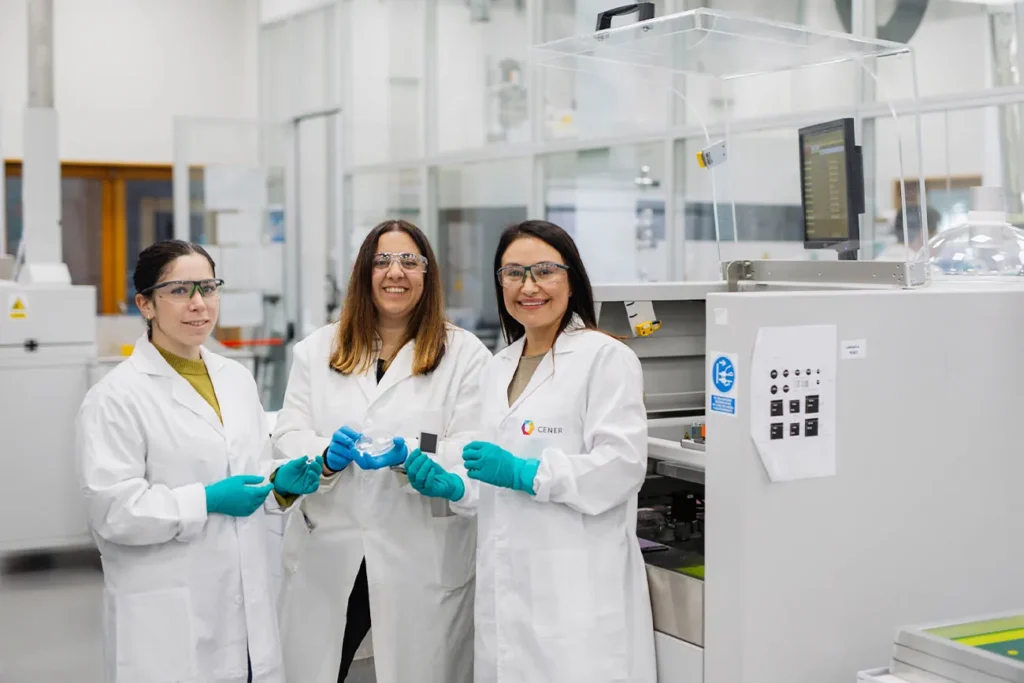
The National Renewable Energy Centre (CENER) and the Lurederra Technology Centre, both members of ENERCLUSTER, are developing the H2SON project, which aims to improve solid oxide electrolysis (SOEC) cells using ceramic nanoparticles to produce green hydrogen more efficiently. Both centres are part of the Navarre R&D&I System (SINAIDi), coordinated by ADItech, and the initiative is funded by the Government of Navarre.
The project, under way since 2025, pursues a triple objective: to increase the performance of this technology, extend the service life of the cells, and facilitate their manufacture on an industrial scale. Producing renewable hydrogen at a competitive cost is one of the great challenges of the energy transition: according to the European Union Agency for the Cooperation of Energy Regulators (ACER), its average cost is around 8 euros per kilogram (roughly four times more than that obtained from fossil fuels), and electricity can account for up to half of that figure.
Electrolysis at 800 °C
SOEC electrolysis works with steam at temperatures close to 800 °C, which speeds up the chemical reactions, reduces the electricity required, and makes it possible to do without precious metals such as platinum or iridium. It is therefore particularly well suited to hard-to-decarbonise industries with high energy demand (such as steel, cement, and ceramics), which can harness their surplus heat to produce hydrogen.
In the division of tasks, Lurederra handles the design and manufacture of the nanomaterials (by flame pyrolysis) and their deposition onto the cells, while CENER leads the manufacture, optimisation, and electrochemical characterisation of the SOEC cells. The use of ceramic nanoparticles makes it possible to control precisely how the different layers of the cell are structured, a key factor in their stability and their performance at high temperatures.
From the laboratory to industry
H2SON has taken an industrial perspective from the outset: it works with cells measuring ten by ten centimetres and develops scalable manufacturing processes at a reasonable cost. According to the estimates of the research team, led by Yuli Betancur and Carmen Garijo (CENER) and Cristina Salazar (Lurederra), the technology would make it possible to increase the efficiency of each cell by around 10 % compared with current commercial solutions. Potential beneficiaries include the steel, cement, and ceramic industries, sectors that are difficult to decarbonise.
Solid oxide cells also offer an added advantage: they can operate reversibly, generating hydrogen when there is surplus renewable energy and producing electricity when it is needed. A versatility that would allow a single facility both to store renewable energy and to return it to the grid.
Source: Navarra Capital. Photograph: Nekane Barian for Navarra Capital.